
The Lunatic Express
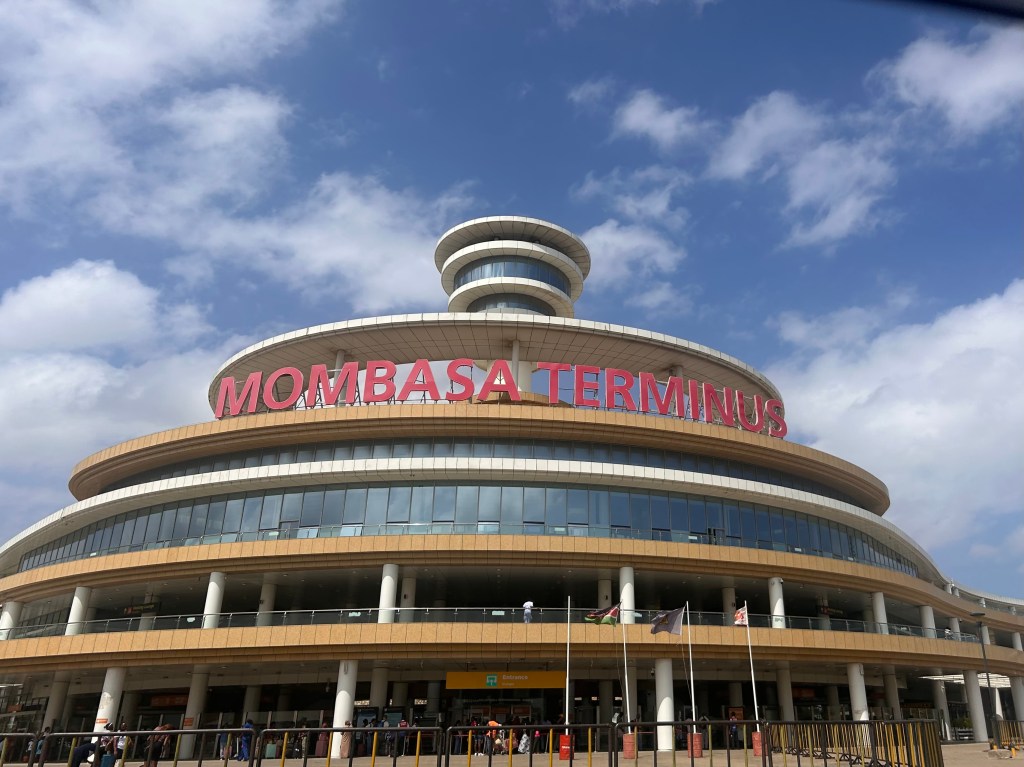
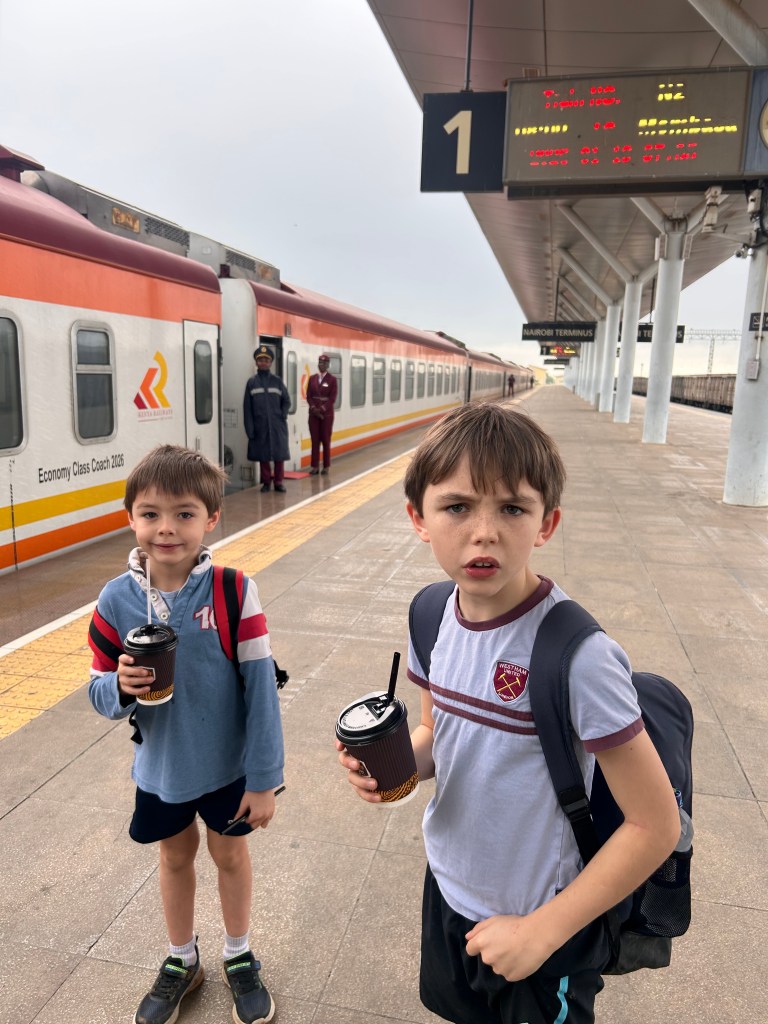
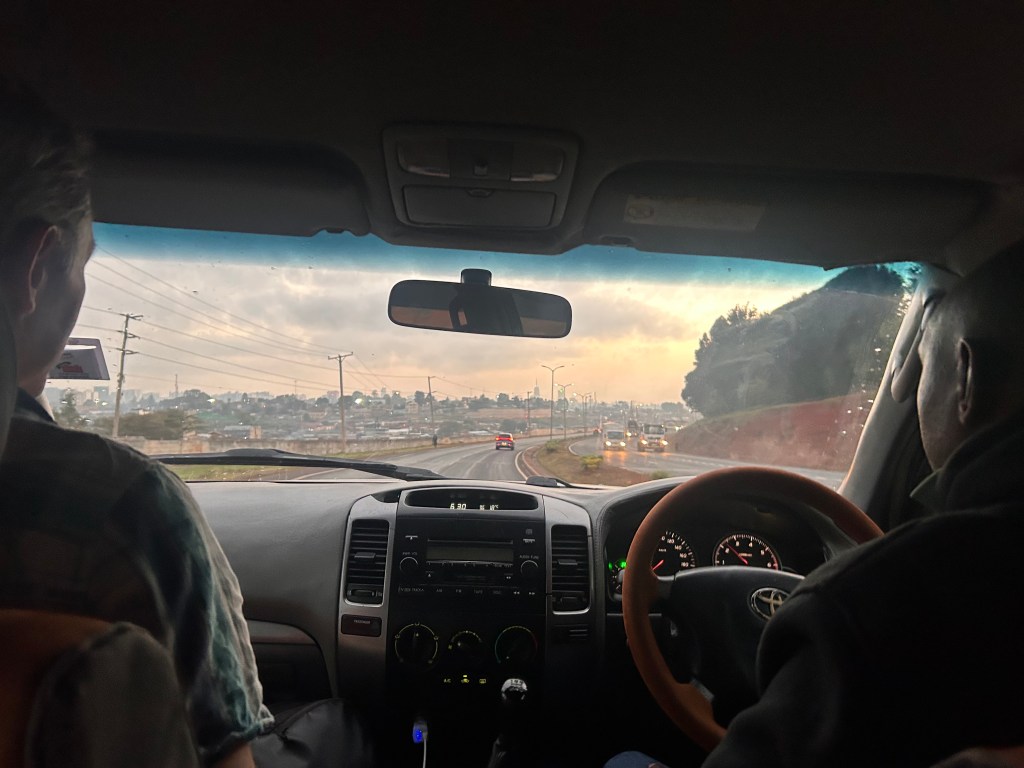
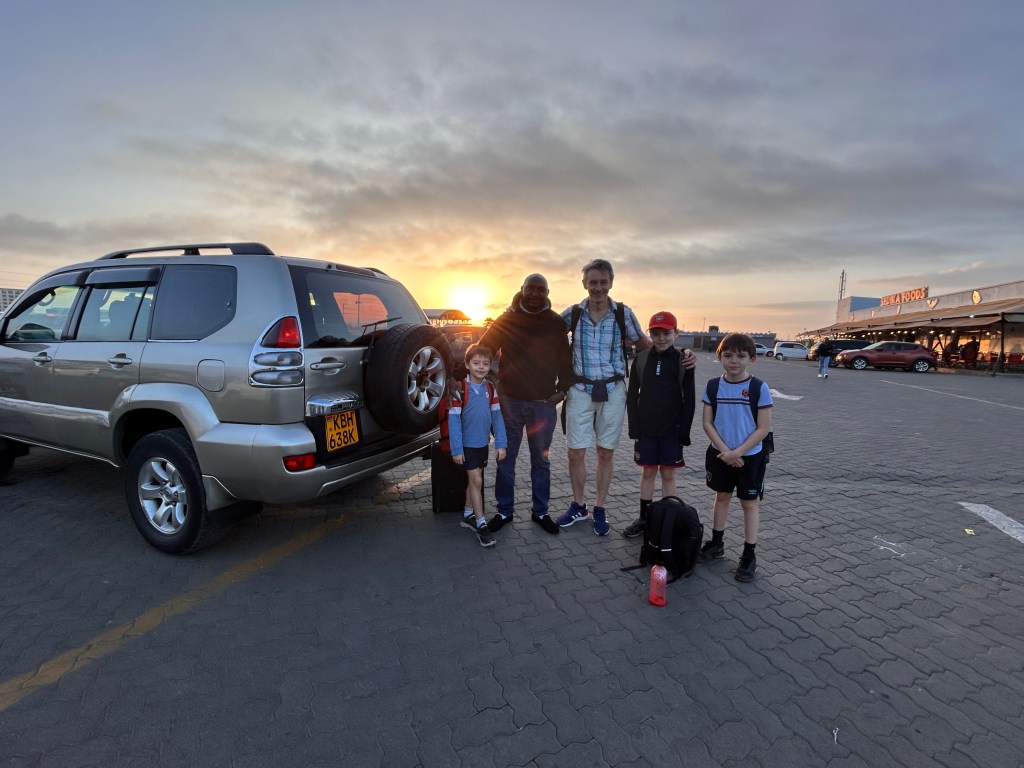
The ever-reliable Karanja picked us up in Karen before dawn. Our destination: the new and mighty Nairobi railway terminus. We arrived via unlikely back streets, red-earthed and pot-holed – which perhaps made the station seem even more enormous and shiny when we bounced round a corner and suddenly arrived. The station is Chinese planned and paid for, just eight years ago. But our route to Mombasa is much older. As soon as we knew we would be spending time in Kenya, this was the trip I wanted to do the most.
The railway was the reason my grandfather was born in Nairobi in January 1922: his father was an engineer who spent decades working on it. But more than family interest, this is famously the “railway that built a nation” – or, as its 19thC detractors dubbed it, (and certainly our boys’ preference): the Lunatic Express.
Starting in Mombasa in 1896, the railway inched its way across 650 unforgiving miles, finally reaching Lake Victoria in 1901. It was hailed as an extraordinary feat of human endurance as well as engineering. But it was also controversial and costly, both financially and in terms of human life. Churchill, who rode the line in 1907, declared it was a testament to the British ability of “muddling through…through everything—through the forests, through the ravines, through troops of marauding lions, through famine, through war, through five years of excoriating Parliamentary debate”.
Part of the row was about it’s purpose: why spend millions building a railway across a hot, diseased wasteland that didn’t even belong to Britain? The answer was pushed by anti-slavery campaigners who were determined to stamp out the Arab-Swahili trade that still flourished in East Africa. But the argument that won the day was made during the Scramble for Africa by imperial strategists who argued that Britain needed to control the headwaters of the Nile to protect the Suez Canal and the critical trade route to India. After years of rows and resistance, the Uganda Railway was eventually given the go-ahead. Thousands of Indian coolies were recruited for their experience and impressive work ethic but even they struggled; as many as 3,000 died during construction.
The railway and its challenges started attracting a global following, particularly when it reached the Tsavo River in 1899 and the camps were besieged by a man-eating lions. This deadly and fearless pair repeatedly snatched labourers from their tents at night; more than 100 died. Night after night, the lions out-witted railway authorities and famed game hunters who tried to shoot them. A District Commissioner took up position one night with some bait and his gun. Unfortunately he fell asleep and the lions took both him and the bait. The lions were eventually shot – they can still be visited now, in the Chicago Field Museum.
The railway was finally completed – though it was really only the first phase. Another generation of engineers, like my great-grandfather, were recruited to sort out permanent bridges and viaducts to replace routes that had been temporarily thrown up, and also to stake out new branch lines in Kenya and Uganda to boost East African trade.
A century-and-a-bit on from then, us Harrises clutched our tickets at Nairobi. We said goodbye to Karanja and put ourselves in the brilliant hands of Edwin the porter. He guided us, and our mountain of luggage, through various stages of security and checks and onto the train, with a promise that his porter friend in Mombasa would meet us the other end.
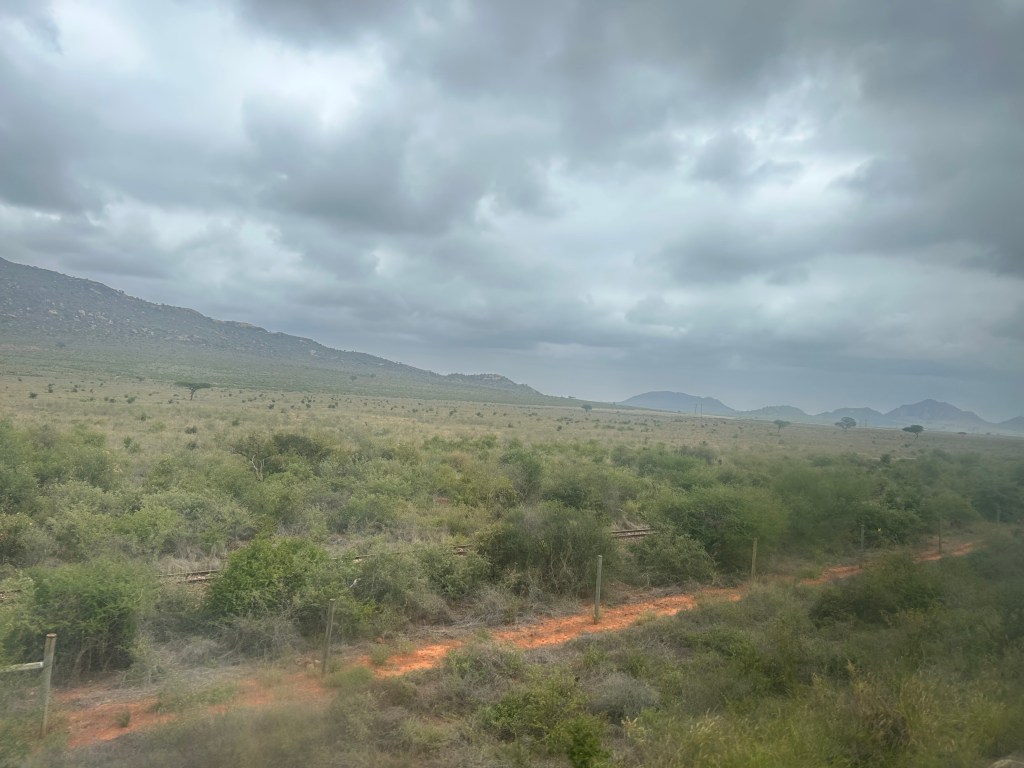
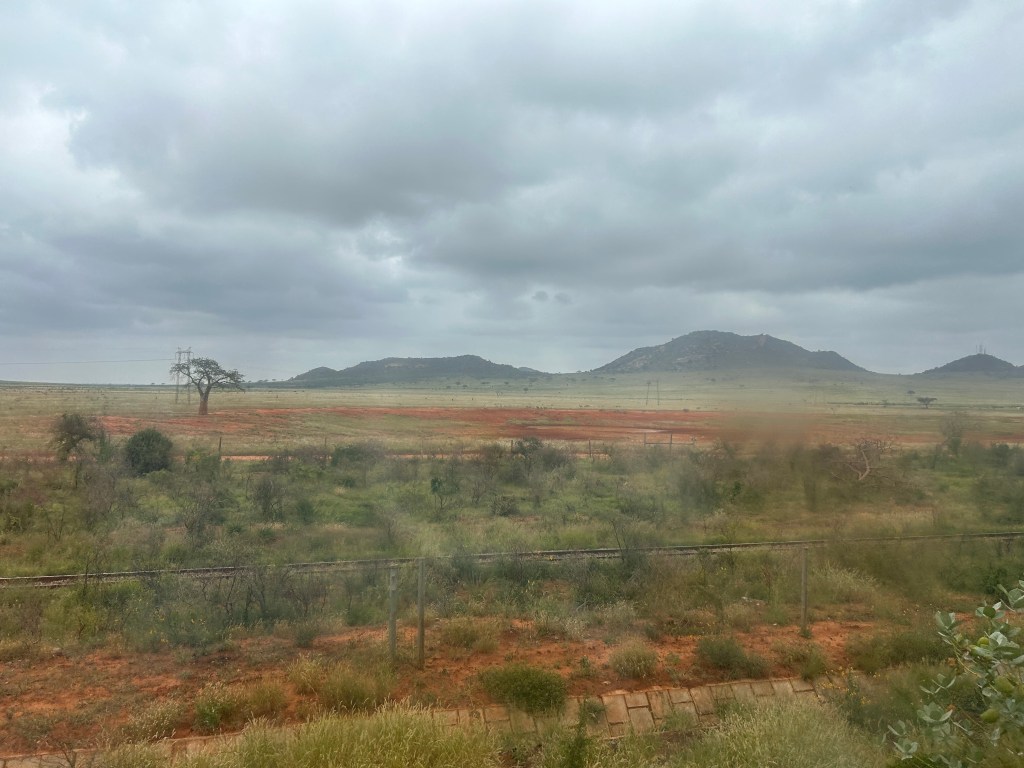
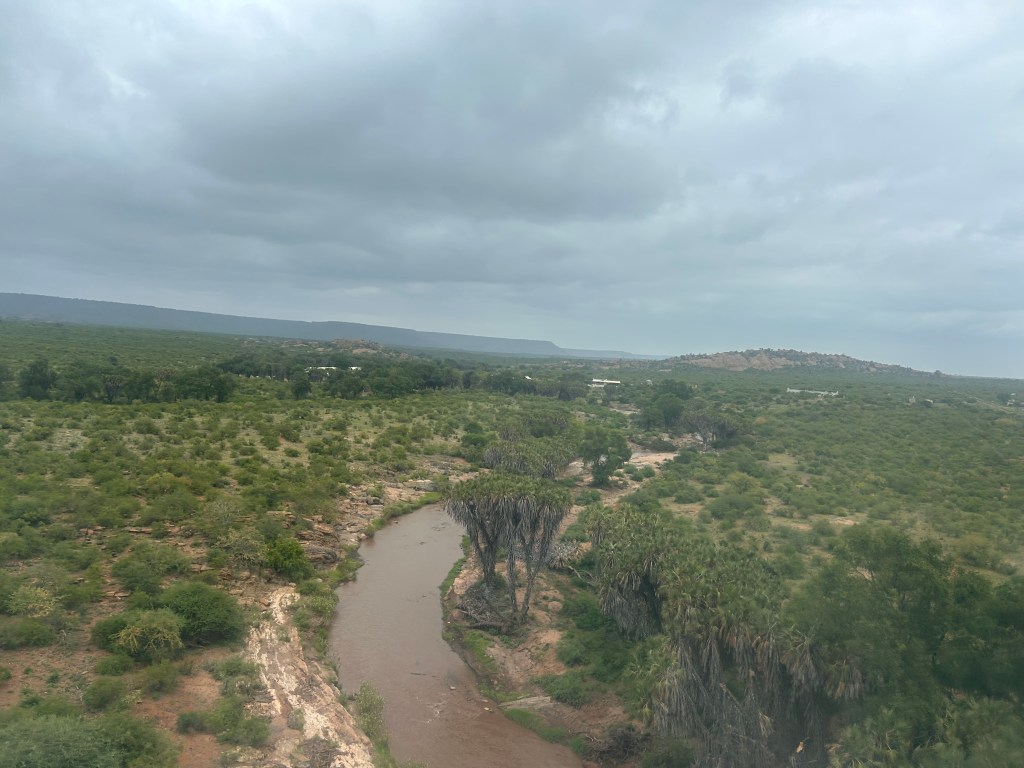
We squeezed into our carriage that was otherwise filled with a trip of school girls. They were immaculately behaved, quietly stealing glances at our rowdy boys, but otherwise sleeping on their arms or watching out of the windows. And what a feast: as the train swept through Tsavo National Park, we saw zebras, giraffes, elephants, impala and even an ostrich. There were red-dusty farms with cows and sheep; great muddy rivers; great empty plains stretching out for miles; collections of houses and dwellings and old railway villages. The boys yelled with delight and amazement when they spotted the wildlife and wrote long lists of everything they’d seen. The journey was six hours; we had chicken sandwiches and cokes and the boys marched up and down the train – then came scuttling back having met a gun-wielding security guard.
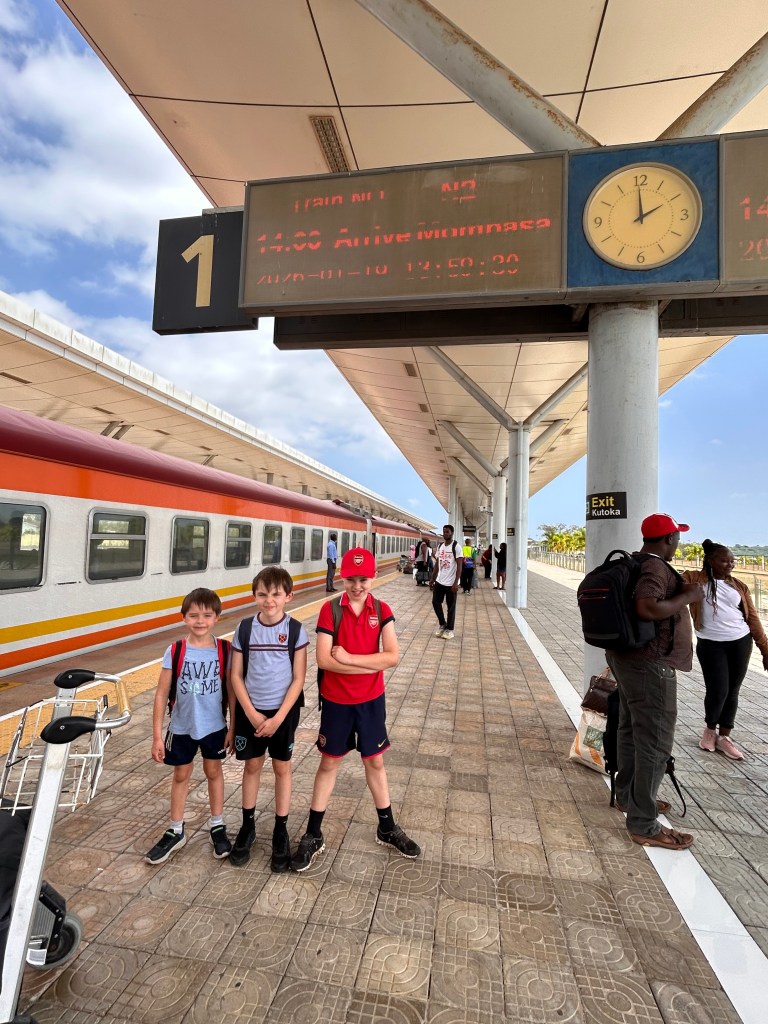
All too soon we reached Mombasa – another huge terminus, hot and humid. But there indeed was Edwin’s porter friend to meet us on the platform and delivered us to Karanja’s friend, Brighton, who was ready to drive us on the next leg of our adventure: three hours up the coast to Watamu.
Spanner from Uganda and Nairobi… 100 years on
We faced our first big challenge weeks long before we left for Africa. A general election was scheduled in Uganda two days before we were due to arrive. The result was never in doubt. In a crowded field, Uganda’s President Museveni is one of Africa’s most formidable ‘stayers’, with a firm grip on power since 1986. But this time, support for Museveni’s main challenger – Bobi Wine, a wildly popular reggae singer from Kampala’s slums – was threatening the status quo. In November we were warned that Uganda was braced for disruption and violence – and so we should be too. Our flights were via Nairobi anyway so we swiftly built in a pause in Kenya, to wait and watch. This was made harder when the government shut down the internet across Uganda during the polling period. But we aimed for a two week fire-break, prayed for Uganda and hoped for the best.
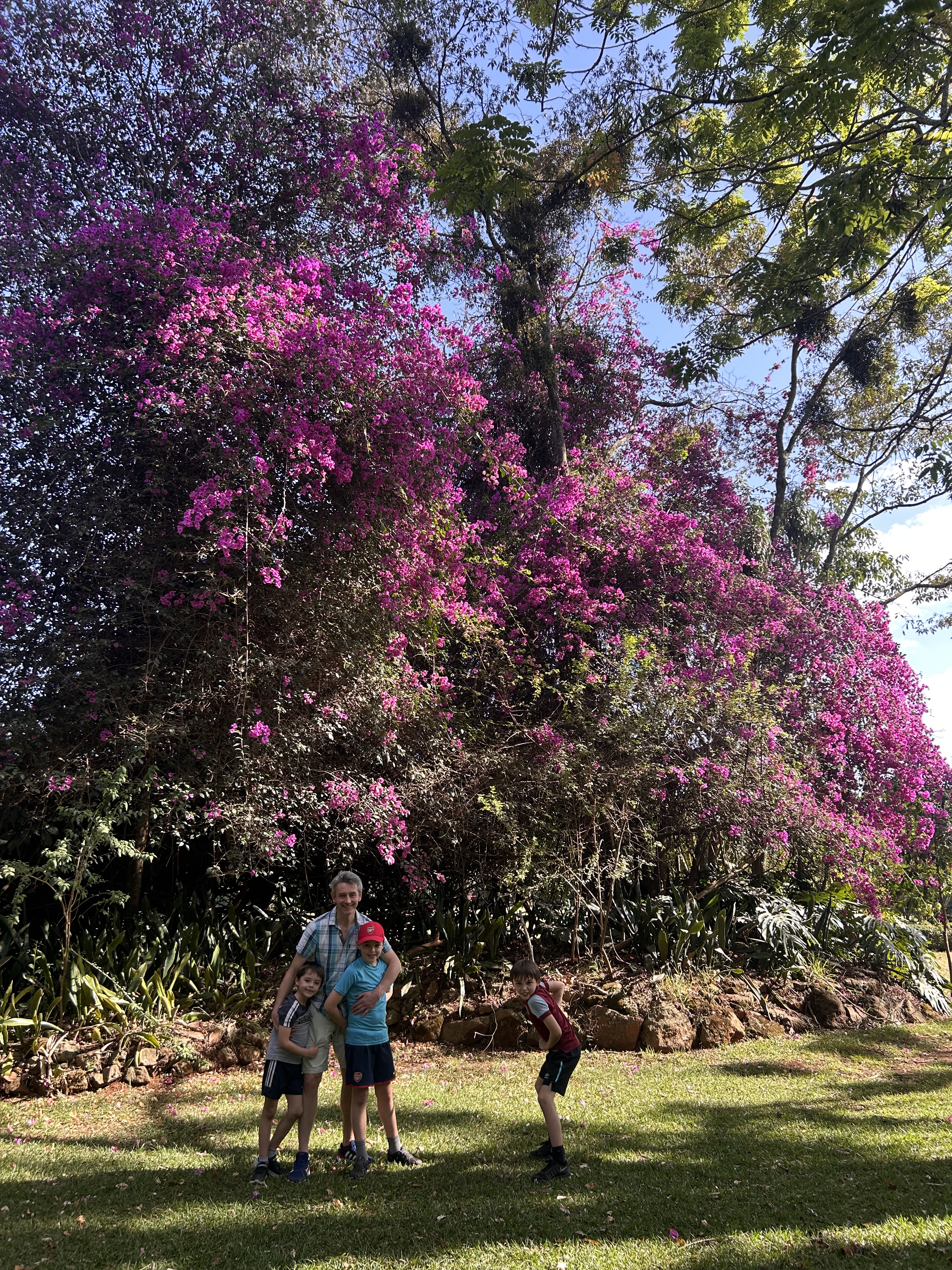
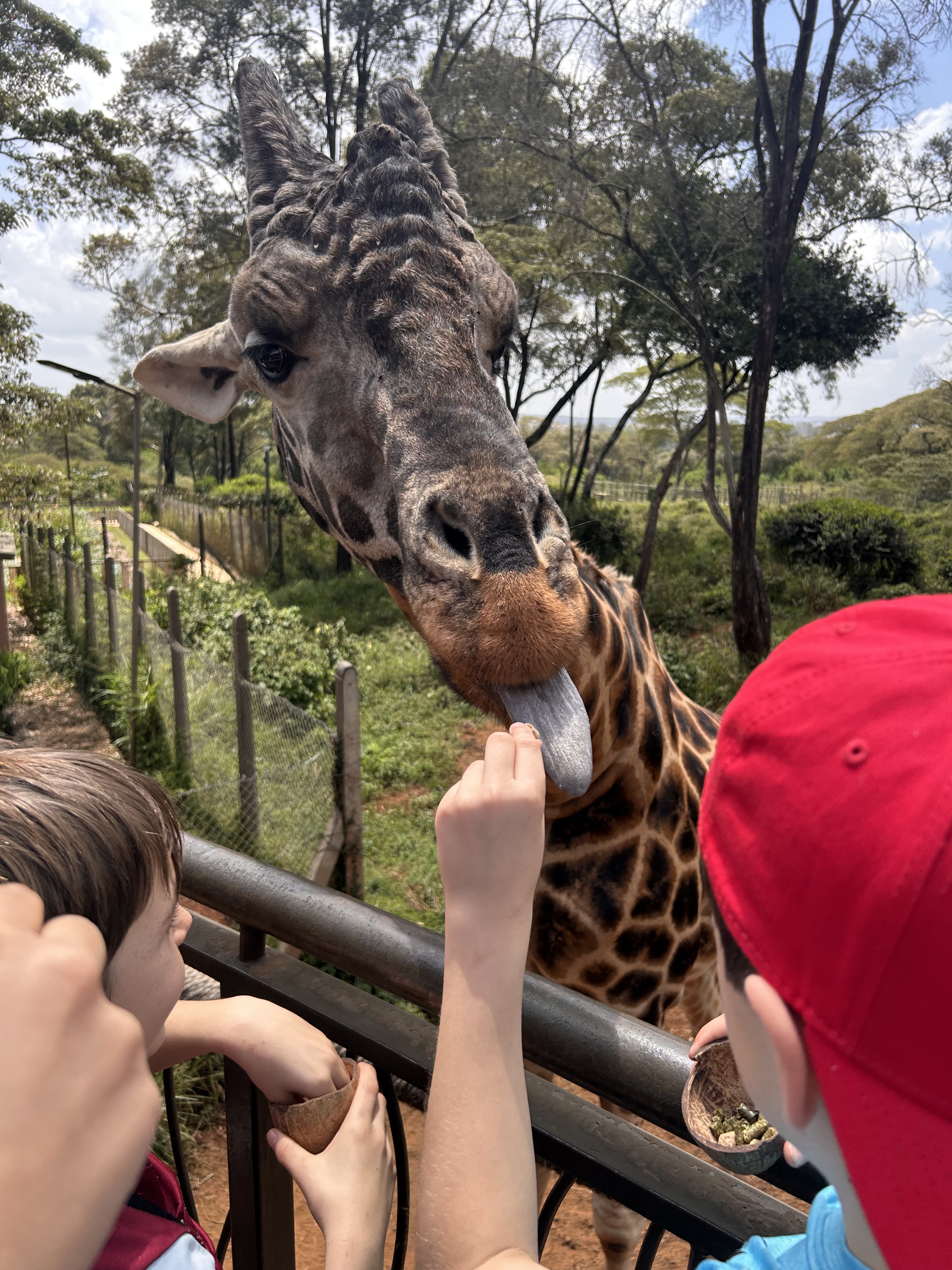
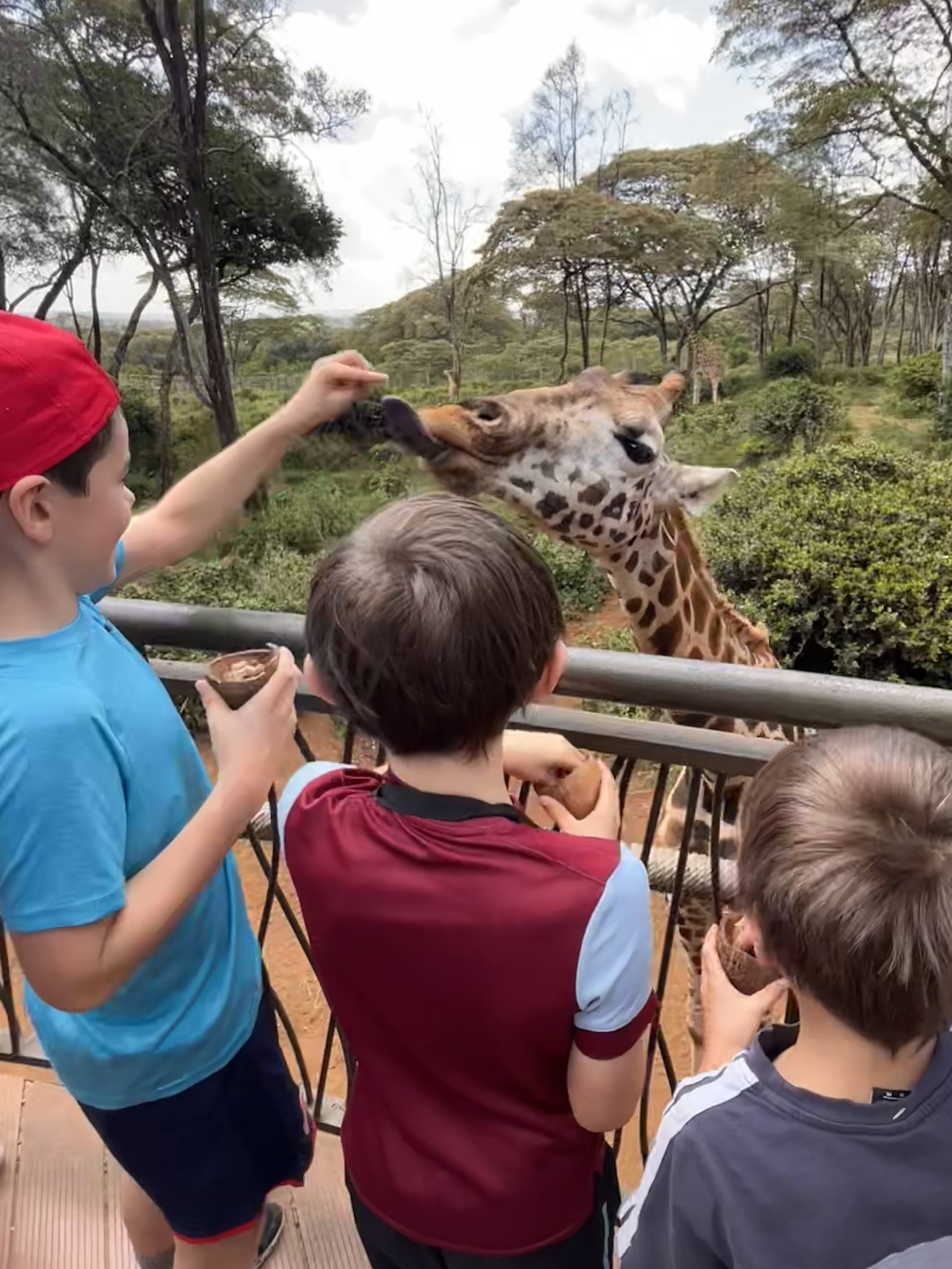
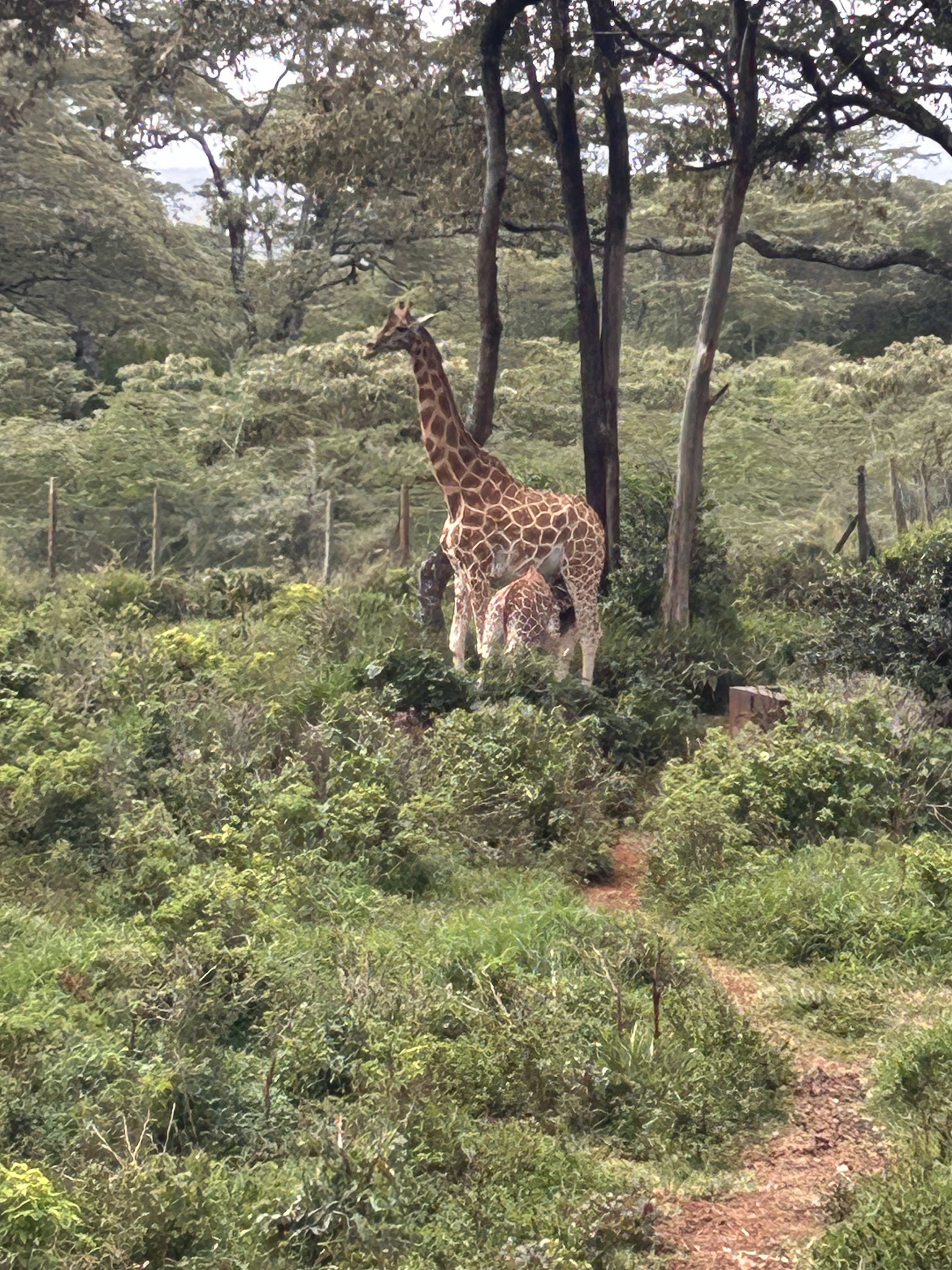
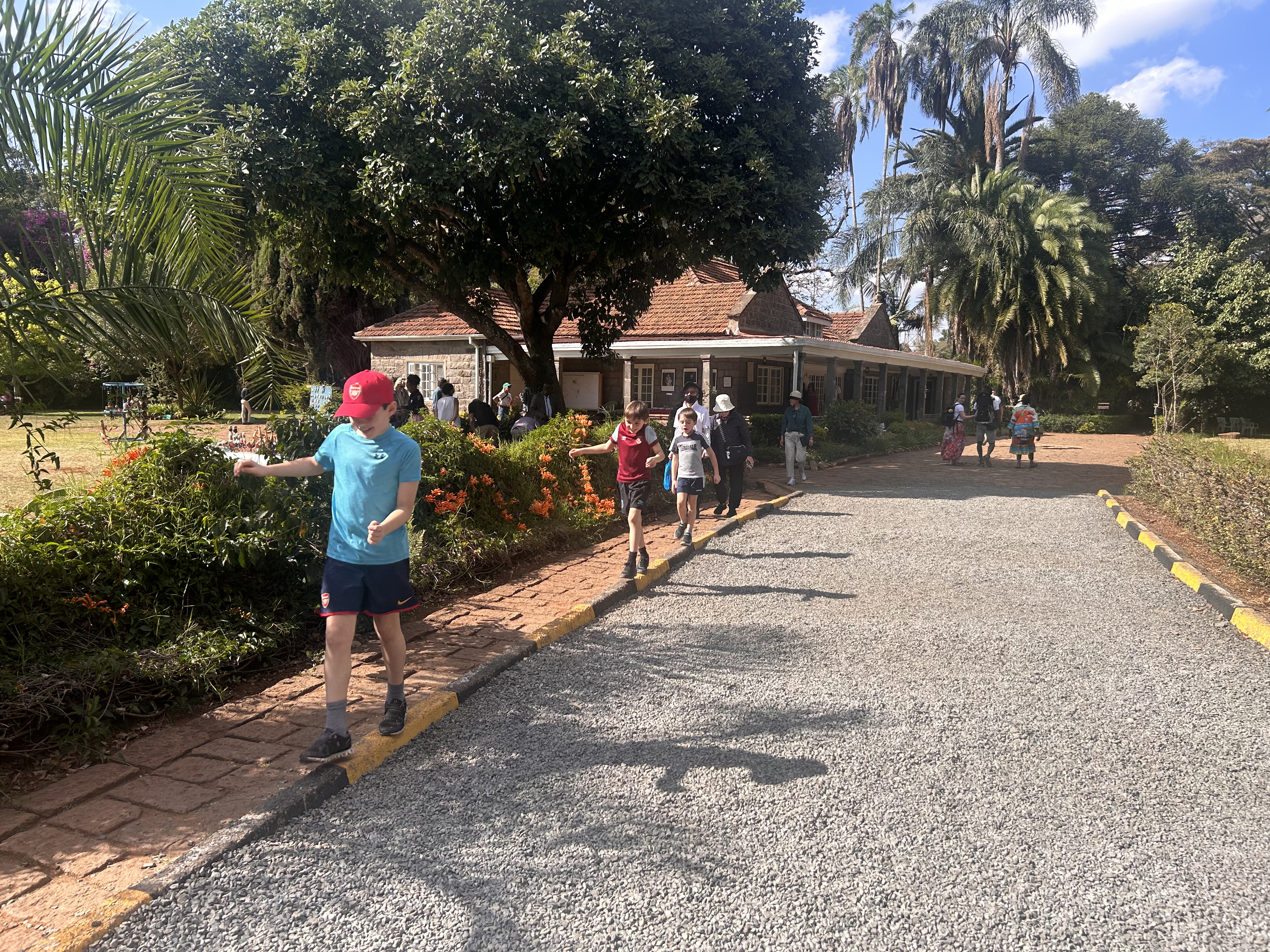
Of course Kenya was more than a silver lining. We spent two nights in Nairobi – a perfect starter with the fabulous Giraffe Centre and a wander around beautiful Karen. The boys were thrilled with the giraffes who were only too happy to extend their long black tongues for yet another ton of tourist nuts. I tried to convey the glories of Karen Blixen as we roamed around her home, gardens and relics from her farm “at the foot of the Ngong Hills”. But some kittens under the astounding bougainvillea understandably stole the show.
Karanja’s whistle stop tour took us up the Ngong Road. Today this thoroughfare is a seething mass of traffic, tuk-tuks and dusty commuters, flanked either side by a crush of trading stalls and sellers. But 100 years ago this was a leafy road of fledgling farms – and the home of my great-grandparents: Hugh Massy-Birch, an engineer, and Millicent, who was unusually keen on adventure (she shot a lion on her honeymoon). My grandfather Jock and his brother Robin were both born here in 1922 and 1924 respectively.
Back then Nairobi had only recently graduated from being a marshy swamp where British and Indian railway workers were housed in massed ranks of white tents. They were midway through a five year ordeal of building the infamous Uganda Railway. The camp was chosen in 1899 as the last stretch of flat ground before the tracks had to go up and over the Great Rift Valley. Such was the scale and complexity of the obstacle that all commissioners and senior personnel were moved up from their HQ in Mombasa to tackle it. So Nairobi (from the Masai Enkare Nyirobi meaning ‘place of cool waters’) was established, unintentionally but irrevocably, as the nerve centre of the emerging colony, despite dire health warnings about the swarms of mosquitos.
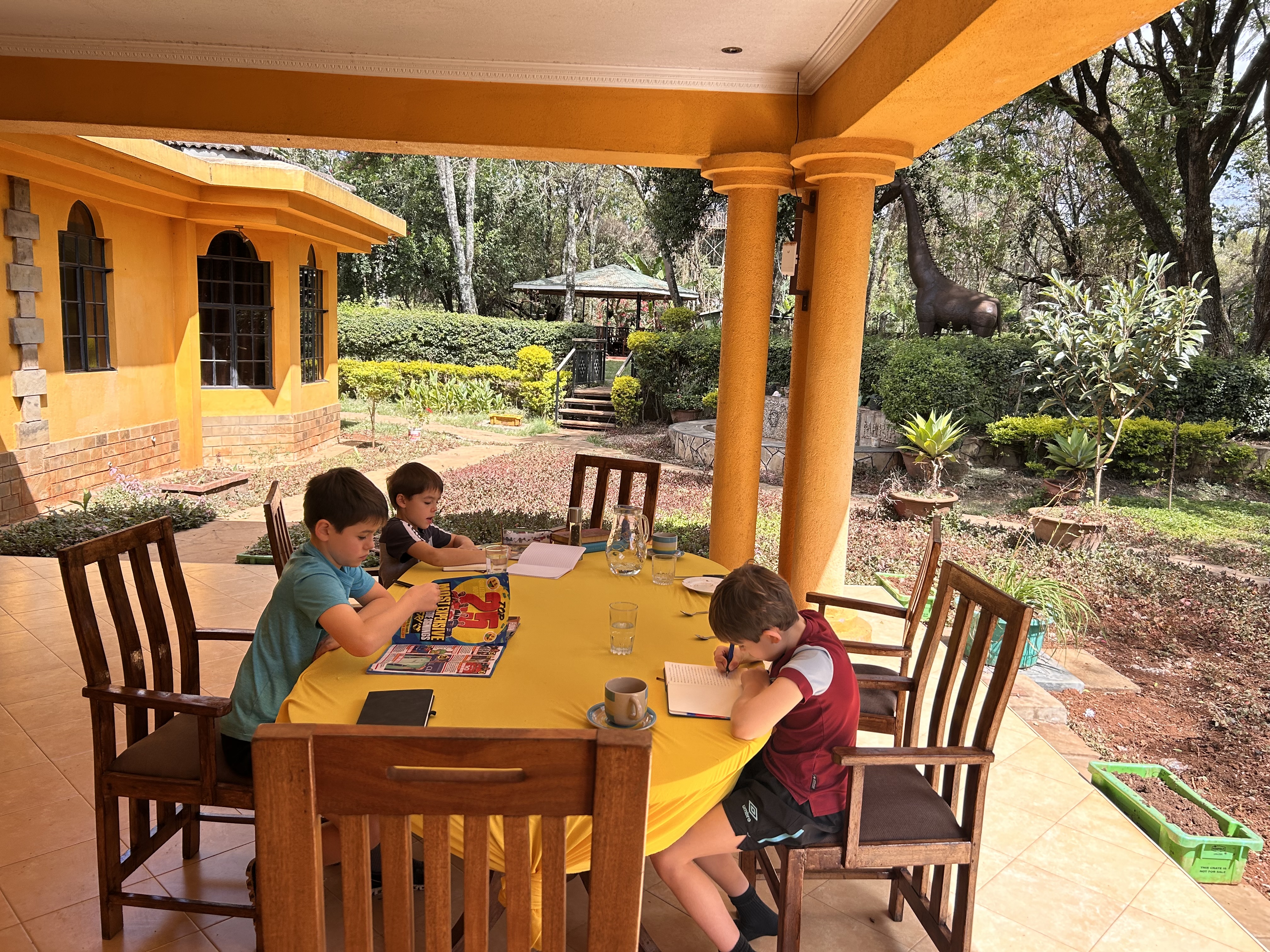
My great-grandfather arrived in 1907 by which time pioneers, led by Lord Delamere, were expending vast fortunes trying to establish cows, coffee and cotton. My great-grandfather was focused on a different problem: the newly laid but far-from-completed Uganda Railway – more on that to follow. Of course, my great-grandparents’ home on the Ngong Road is long gone but we tried hard to imagine it. There wasn’t much time – we raced back to our B&B in Karen to help the un-African dogs chase the monkeys around the garden and pack for our first big adventure… on the railway itself.
And we’re off…
-
London – Nairobi
The best thing about travelling with the boys is that, once it’s finally D-Day, everything is an adventure, even the testing bits.
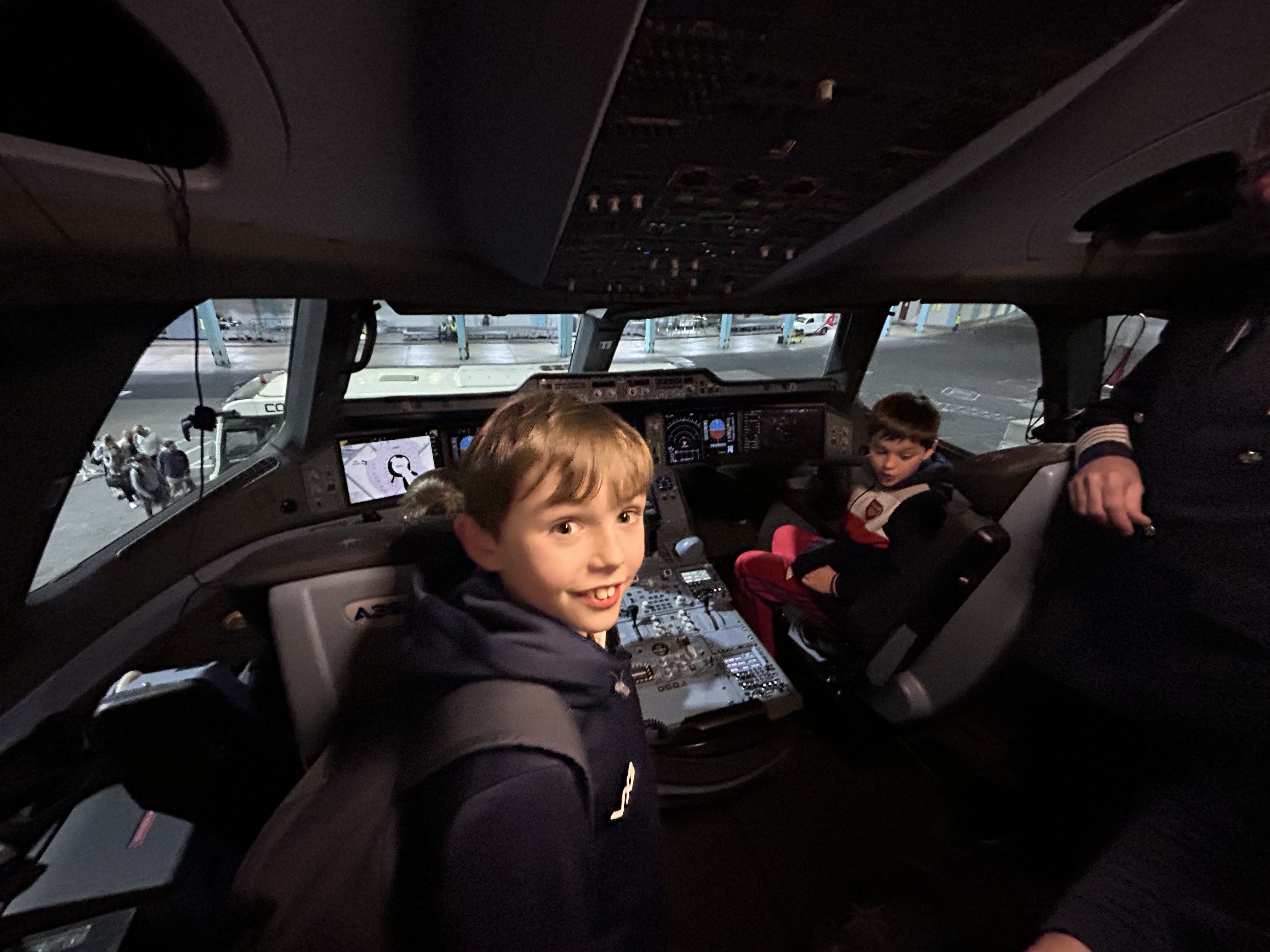
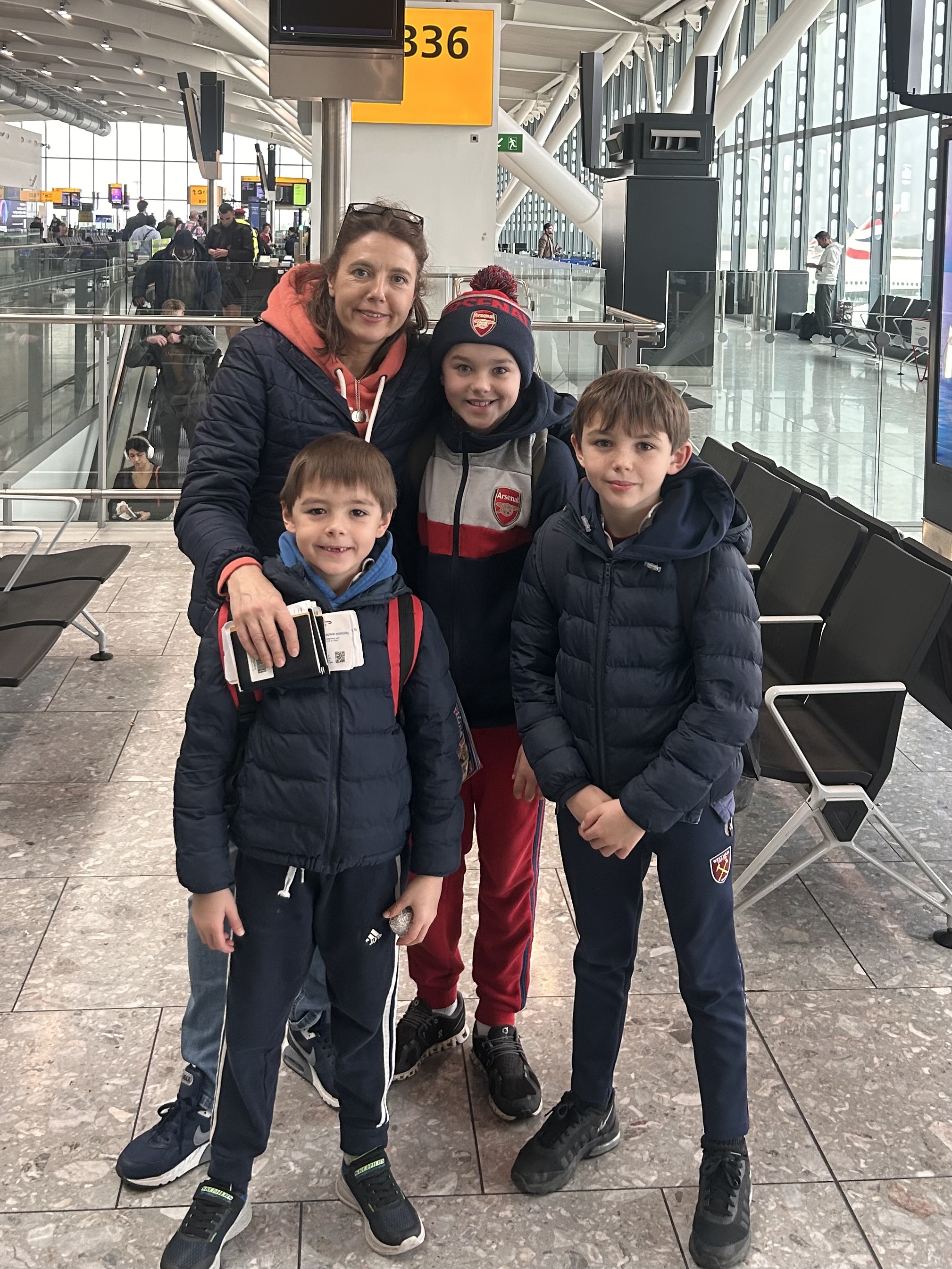
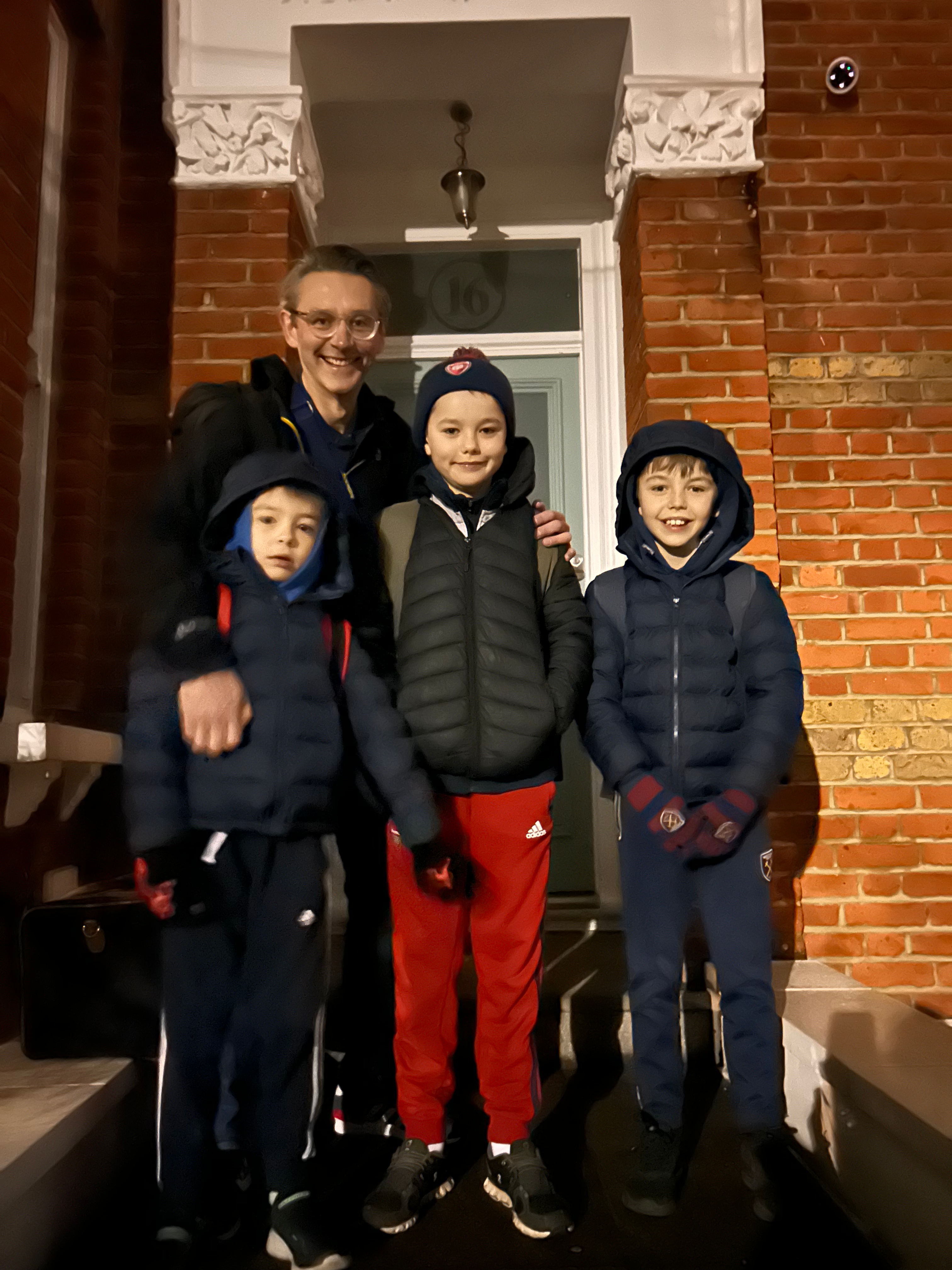
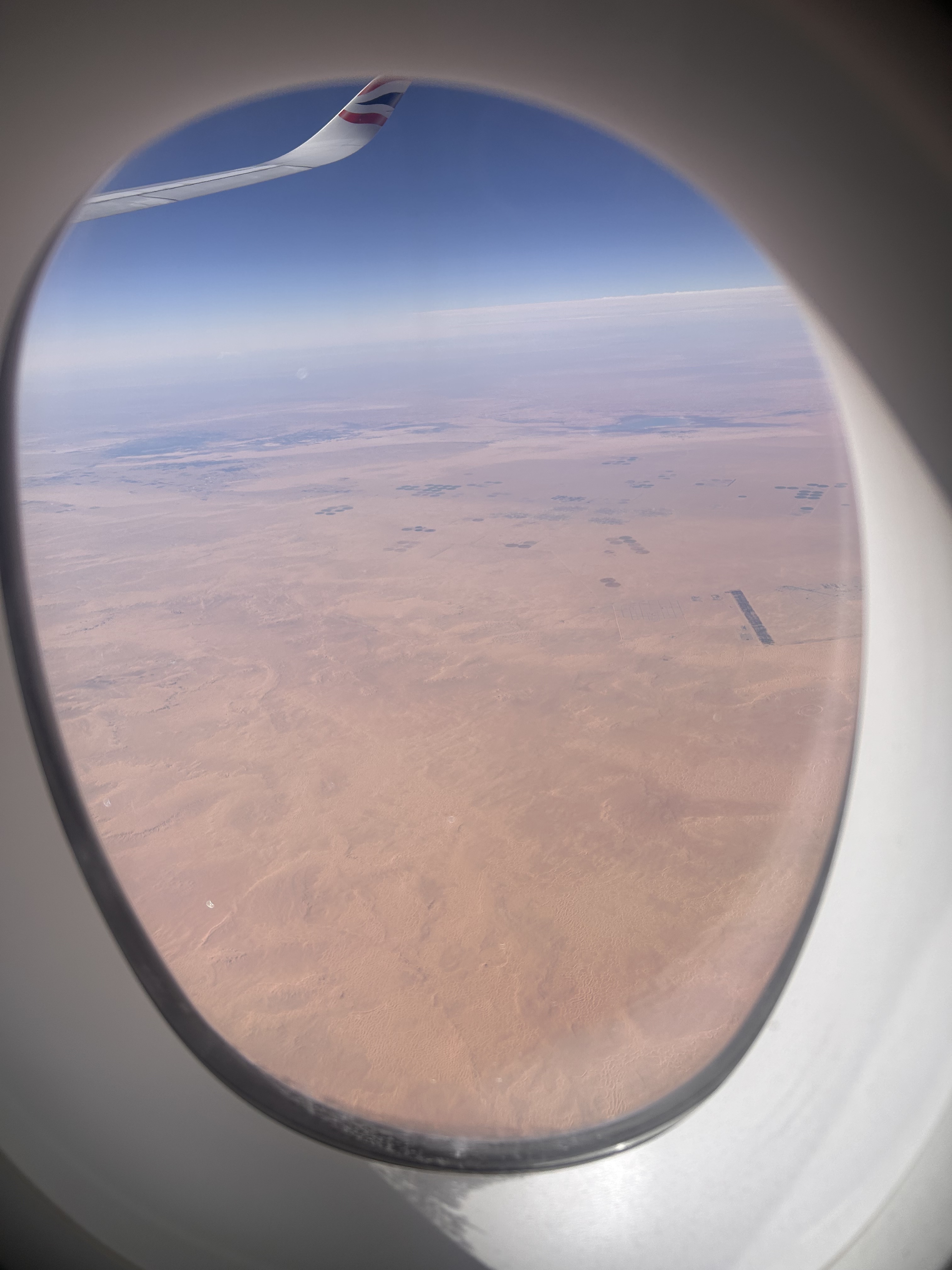
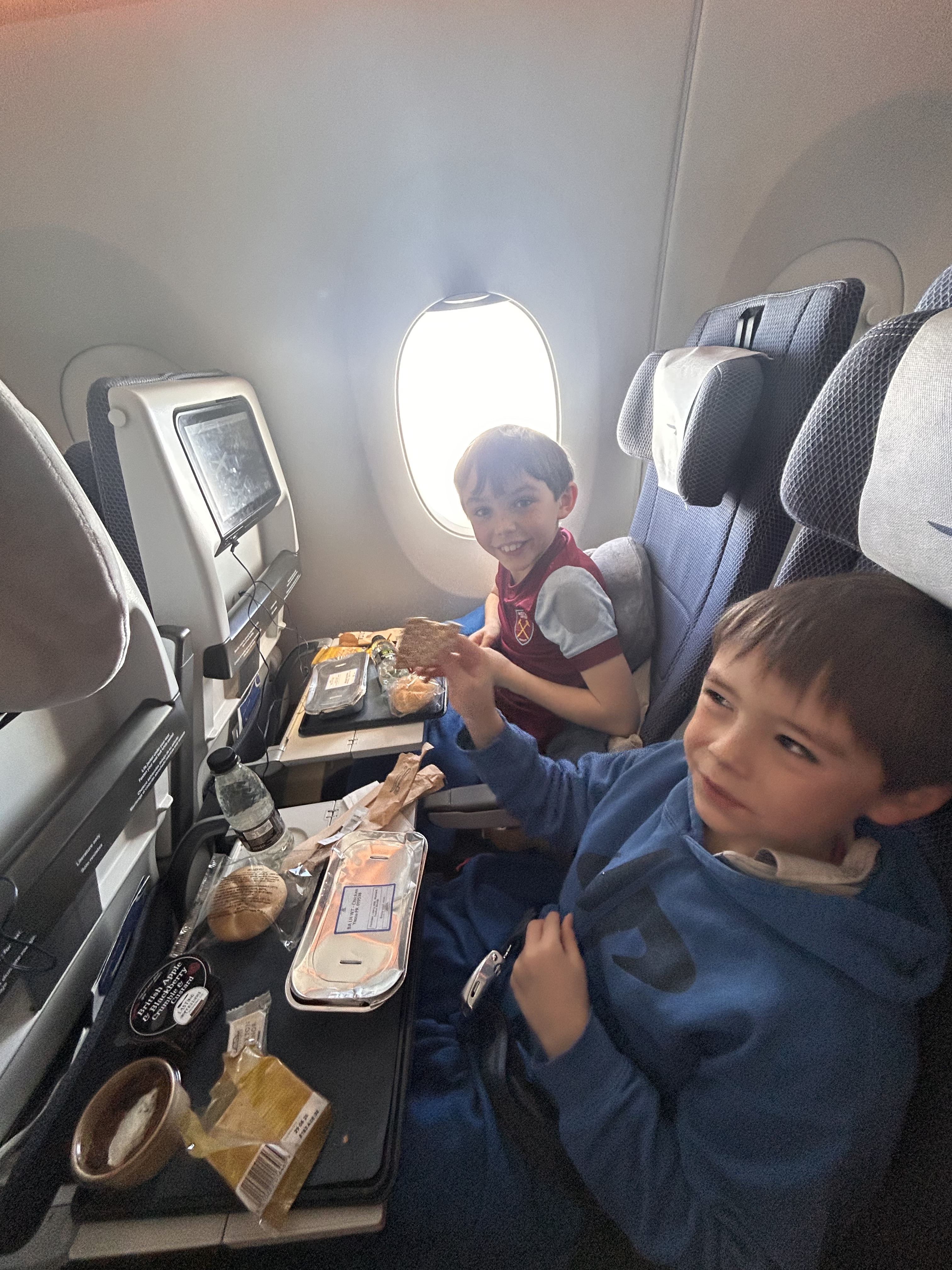
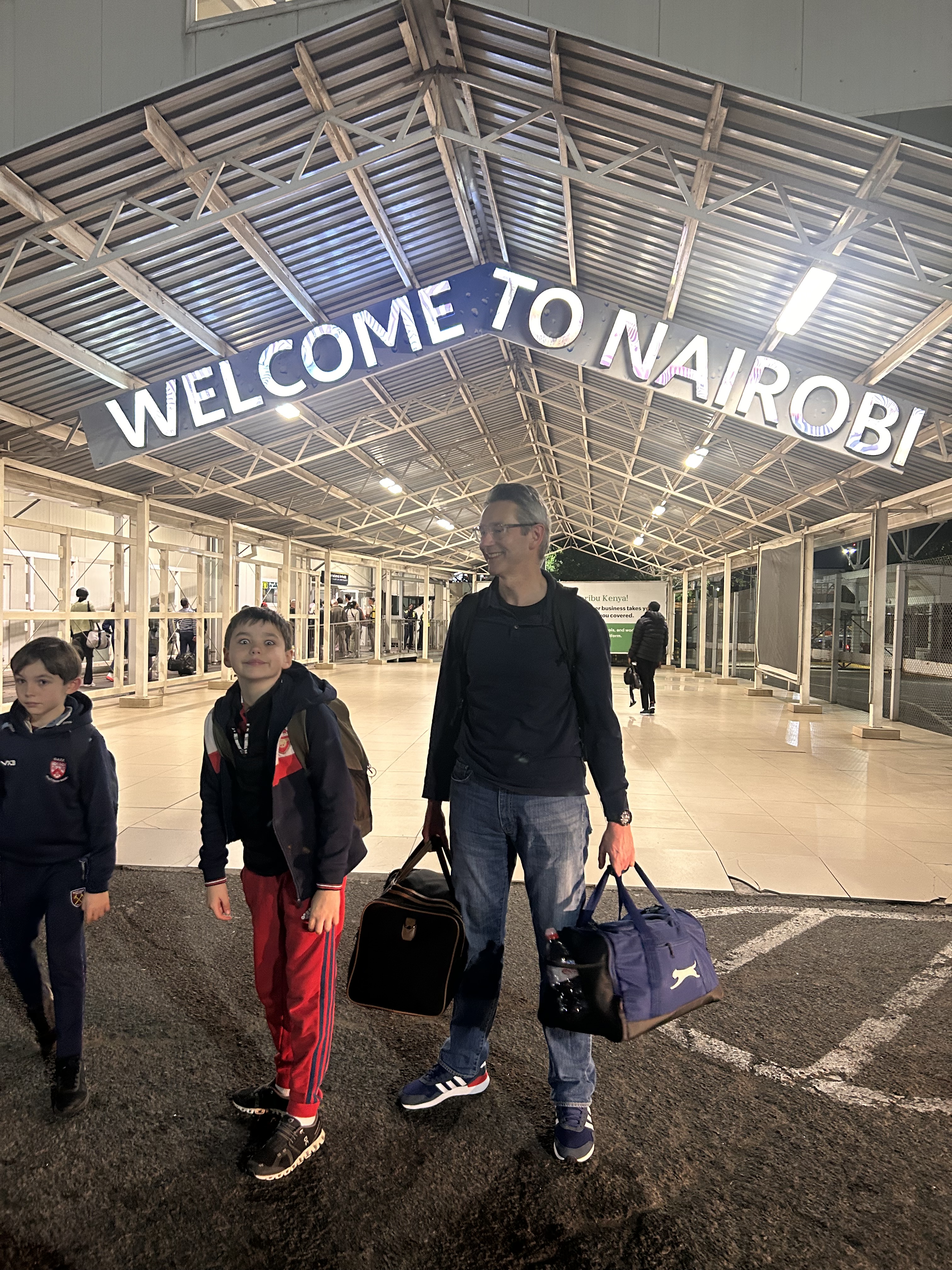
London, mid-January, 545am: dark, cold, raining; a dash to the station, one train cancelled, another delayed; Heathrow rammed, gate miles away; full and squashed nine hour flight. But all was just excitement and drama to the boys who were thrilled by the dark start, the Sahara Desert, the sky-high sunset, the non-stop movie menu and endless mini Cokes (probably in reverse order). They even managed to wangle a go in the cockpit as we disembarked (a rare concession since 9/11, we were told). Nairobi airport could have been much harder too: 10pm, hot, busy and chaotic with painfully slow queues: the indifferent passport officer was watching football on his telephone under his desk. The boys were delighted by this fabulous noncompliance and even more pleased when they asked for the score: West Ham had beaten Tottenham and Arsenal was up too. To and fro about the merits of Saka and Bowen meant further delay to get our stamps – but by then even those behind us were smiling. More checks, heavy bags, hot queues, crowds of porters, busy taxis…relief to find Karanja, our driver recommended by a friend, who scooped us up out the throng. Crazy traffic, dark roads, a slightly unnerving meander around Karen and finally our Airbnb after midnight. Cold showers, mosquito nets, malaria tablets, a fuss over drinking water, a nocturnal cockerel and two very un-African fluffy dogs that yap for hours. The boys said it was the best day ever. And that bodes well.
-
London – Nairobi
The best thing about travelling with the boys is that, once it’s finally D-Day, everything is an adventure, even the testing bits.
London, mid-January, 545am: dark, cold, raining; a dash to the station, one train cancelled, another delayed; Heathrow rammed, gate miles away; full and squashed nine hour flight. But all was just excitement and drama to the boys who were thrilled by the dark start, the Sahara Desert, the sky-high sunset, the non-stop movie menu and endless mini Cokes (probably in reverse order). They even managed to wangle a go in the cockpit as we disembarked (a rare concession since 9/11, we were told). Nairobi airport could have been much harder too: 10pm, hot, busy and chaotic with painfully slow queues: the indifferent passport officer was watching football on his telephone under his desk. The boys were delighted by this fabulous noncompliance and even more pleased when they asked for the score: West Ham had beaten Tottenham and Arsenal was up too. To and fro about the merits of Saka and Bowen meant further delay to get our stamps – but by then even those behind us were smiling. More checks, heavy bags, hot queues, crowds of porters, busy taxis…relief to find Karanja, our driver recommended by a friend, who scooped us up out the throng. Crazy traffic, dark roads, a slightly unnerving meander around Karen and finally our Airbnb after midnight. Cold showers, mosquito nets, malaria tablets, a fuss over drinking water, a nocturnal cockerel and two very un-African fluffy dogs that yap for hours. The boys said it was the best day ever. And that bodes well.
Stay in Loop
Sign up to receive new stories, travel tips, and photo highlights from our African adventures straight to your inbox.
 Harris’ African Adventure